

Date
24/November/2026
Share
- TL;DR
- Payment Interoperability in Malaysia
- Introduction: The future of payments is connected
- 1. Malaysia’s payment infrastructure is evolving
- 2. Cross-border QR payments are expanding the opportunity
- 3. Why interoperability requires more than another integration
- 4. How PayHub supports the connected merchant ecosystem
- 5. Beyond QR: what comes next?
- Conclusion: Build for connection, not just acceptance
- FAQs
Payment Interoperability in Malaysia: Is Your Bank’s Infrastructure Ready for Cross-Border Growth?
Payment Interoperability in Malaysia
Payment interoperability in Malaysia refers to the ability of different payment systems, financial institutions and payment networks to connect and facilitate transactions through established technical and operational arrangements. Initiatives such as DuitNow QR connectivity and the Interoperable Fund Transfer Framework support the development of a more connected domestic and cross-border payment ecosystem.
Introduction: The future of payments is connected
A merchant in Malaysia may serve local customers, international travellers and online buyers from different markets. Each customer may prefer a different banking application, wallet or payment method.
For the merchant, the expectation is straightforward: make the payment experience easy.
For the financial institution supporting that merchant, delivering this experience requires something more complex: reliable integrations, compatible payment infrastructure and the ability to manage transactions across different systems.
Malaysia is moving towards a more interconnected payment ecosystem. For banks and financial institutions, the opportunity is to prepare their merchant payment platforms for this shift.
The next phase of payments is not just about adding more payment methods. It is about connecting them into a manageable ecosystem.
1. Malaysia’s payment infrastructure is evolving
Malaysia’s digital payment adoption provides a strong foundation for greater connectivity.
Bank Negara Malaysia reported that DuitNow QR transaction volume doubled to 3 billion in 2025, with almost 3 million registered QR touchpoints nationwide.
The next development is interoperability: enabling different payment services to work together under defined technical, commercial and operational arrangements.
On 30 June 2026, BNM issued its Interoperable Fund Transfer Framework. The framework aims to support a more efficient, seamless and cost-competitive domestic and cross-border payment ecosystem while promoting collaboration, competition and fair access to shared payment infrastructure.
For banks, this direction raises an important infrastructure question: how easily can their merchant payment services adapt as new connections and payment experiences emerge?
2. Cross-border QR payments are expanding the opportunity
Cross-border QR connectivity offers a practical example of how the payment landscape is changing.
On 12 February 2026, Payments Network Malaysia (PayNet) and NPCI International Payments Limited signed an agreement to enable QR-based merchant payments between Malaysia and India. The announced rollout is planned in two phases, beginning with Indian travellers paying at supported DuitNow QR merchants in Malaysia, followed by Malaysians paying at UPI QR merchants in India.
For merchants, this creates opportunities to serve customers using participating payment applications from another market.
For financial institutions, it reinforces the need to consider how merchant payment infrastructure handles a growing range of payment connections.
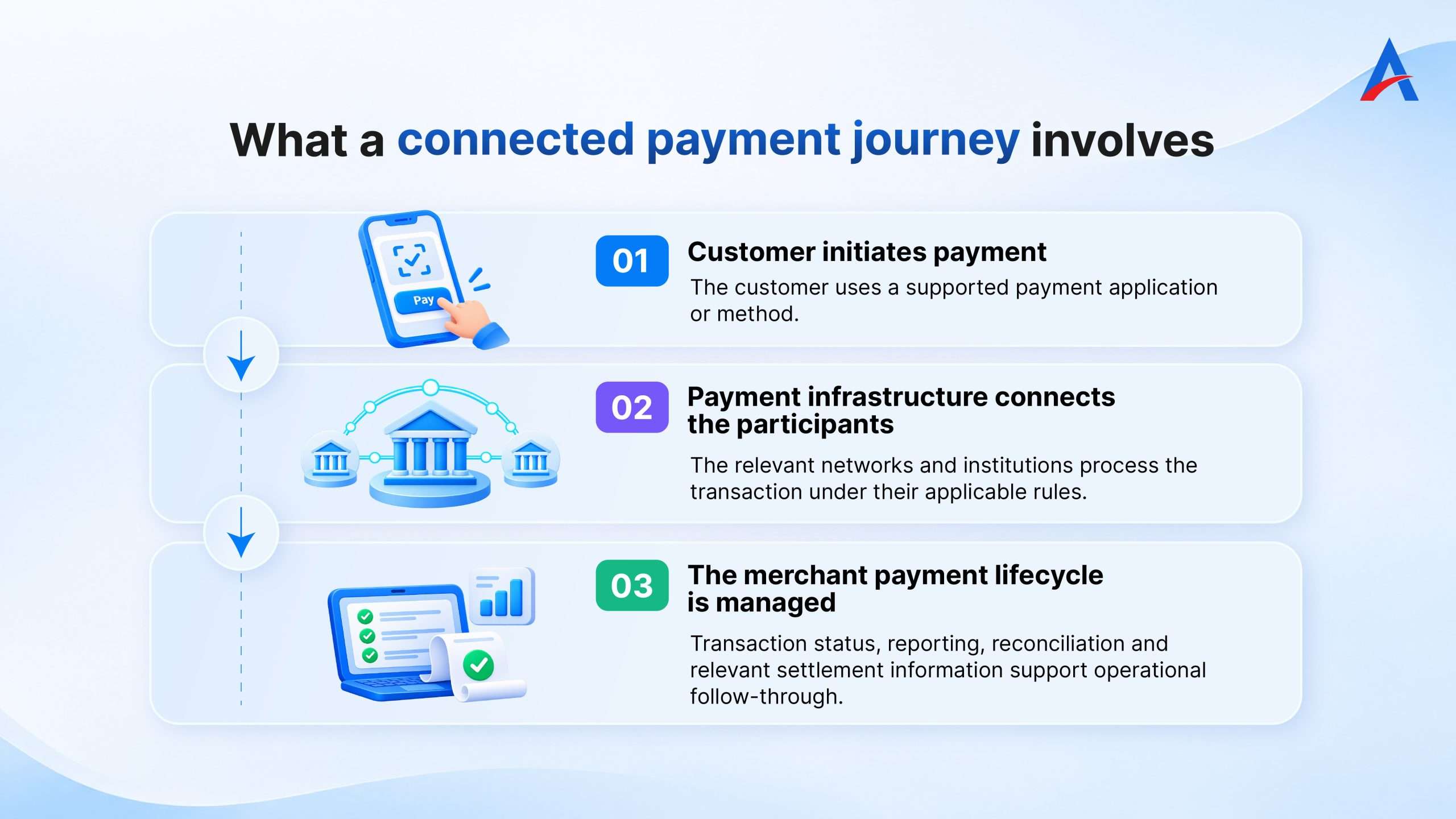
The customer may experience a simple QR scan. The financial institution must still ensure that the underlying payment process is properly integrated and managed.
3. Why interoperability requires more than another integration
Connecting to a new payment method or network is only one part of the work.
Banks must also consider how the new connection fits into merchant onboarding, transaction reporting, reconciliation, exception management and operational oversight.
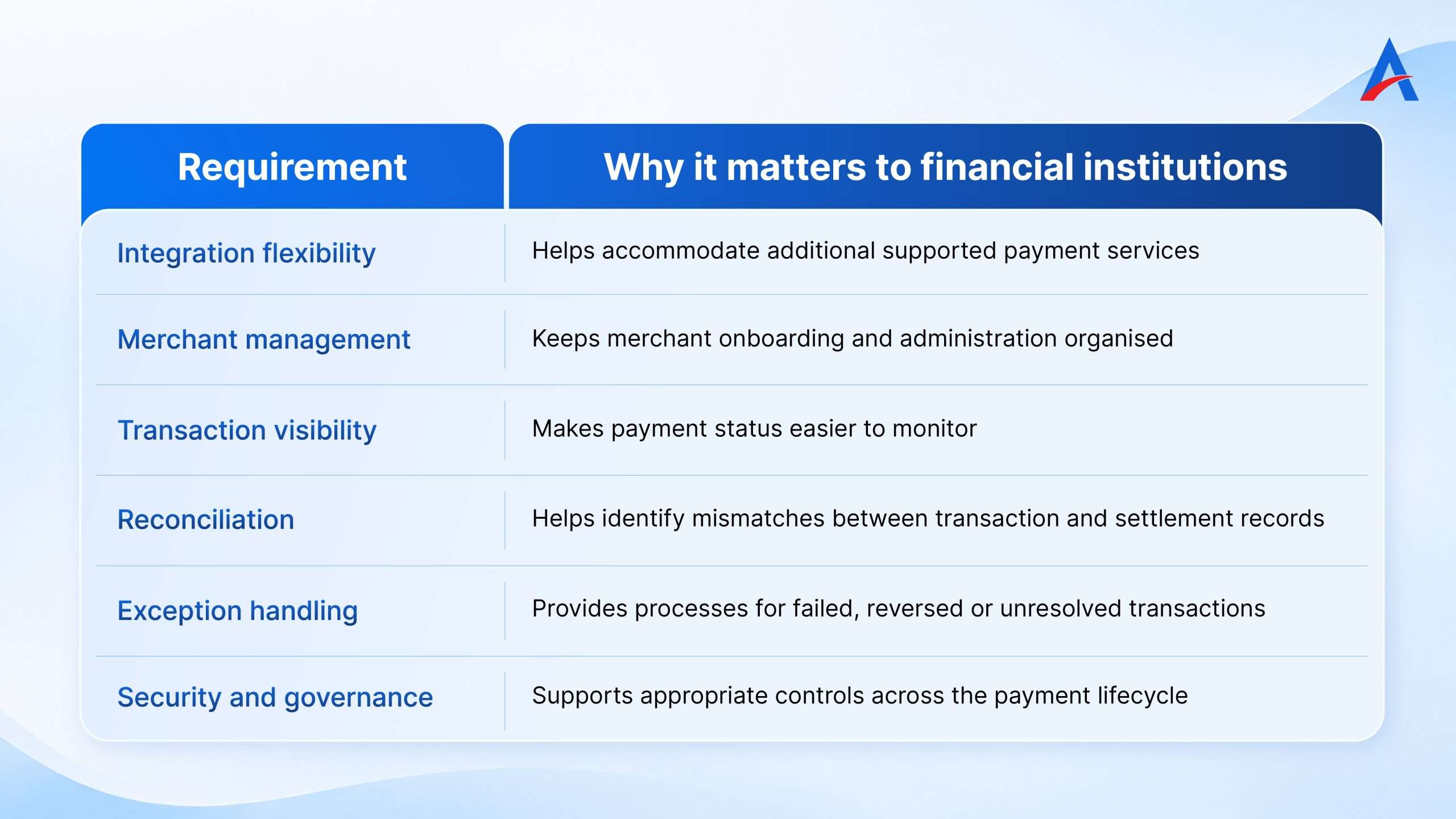
The objective is not to make every payment rail identical. It is to manage the differences without creating unnecessary complexity for merchants and operations teams.
That is where a centralised merchant payment operating layer becomes relevant.
4. How PayHub supports the connected merchant ecosystem
PayHub by Ascertain Group is designed to help banks and financial institutions build and operate their own branded merchant payment ecosystem.
Its role is to bring together merchant management and supported payment workflows within a connected platform. This includes capabilities across payment acceptance, recurring collections, settlement, reconciliation and reporting.
As payment ecosystems evolve, this centralised approach can provide a foundation for financial institutions to manage their merchant services while evaluating additional integrations according to their technical and commercial requirements.
The strategic value is not a promise that every network will be automatically connected. It is the ability to approach merchant payment management as an integrated capability rather than a set of isolated services.
5. Beyond QR: what comes next?
Interoperability is one part of a broader shift towards connected financial services.
BNM’s proposed Open Finance framework, published as an exposure draft in November 2025, focuses on secure, consent-driven sharing of customer financial information. BNM’s 2025 Annual Report describes collaboration with PayNet and industry participants to develop infrastructure and test use cases.
Open Finance is distinct from payment interoperability, but both developments highlight the importance of secure integrations, data governance and well-defined permissions.
For financial institutions, the next step is to evaluate how their platforms can adapt to evolving requirements without assuming that every new service will be immediately available.
Conclusion: Build for connection, not just acceptance
Malaysia’s payment infrastructure is evolving towards greater connectivity, and cross-border QR initiatives illustrate the opportunities this may create.
For banks, the challenge is to manage that evolution without adding unnecessary complexity to merchant operations.
PayHub by Ascertain Group offers a platform approach to building and operating a branded merchant payment ecosystem, bringing merchant management and supported payment workflows into a connected operating layer.
As the payment landscape becomes more interconnected, the institutions best prepared will be those that can manage the entire merchant payment experience, not just the transaction itself.