

Date
9/November/2026
Share
Malaysia Has Solved Digital Payment Adoption. What Comes Next for Banks and Merchants?
What is a merchant payment ecosystem?
A merchant payment ecosystem is a connected set of payment and operational services that enables financial institutions to support merchants across payment acceptance, onboarding, recurring collections, settlement visibility, reconciliation and reporting.
Introduction: The next opportunity is beyond payment acceptance
Malaysia’s digital payments market is growing rapidly. Customers are increasingly comfortable with electronic payments, QR payments are scaling across merchants, and digital transactions are becoming part of everyday commerce.
For banks and financial institutions, however, adoption is only the beginning. The bigger opportunity is to build and operate a merchant payment ecosystem that brings payment acceptance, merchant management, recurring collections, settlement visibility and reconciliation into a connected experience.
According to Bank Negara Malaysia, Malaysia recorded 18.4 billion e-payment transactions in 2025, up 25% from 14.7 billion in 2024. Retail e-payment transaction value reached RM831 billion, a 19% increase year-on-year.
This growth creates a new strategic question for financial institutions:
Are you simply enabling merchant payments, or are you building the ecosystem around them?
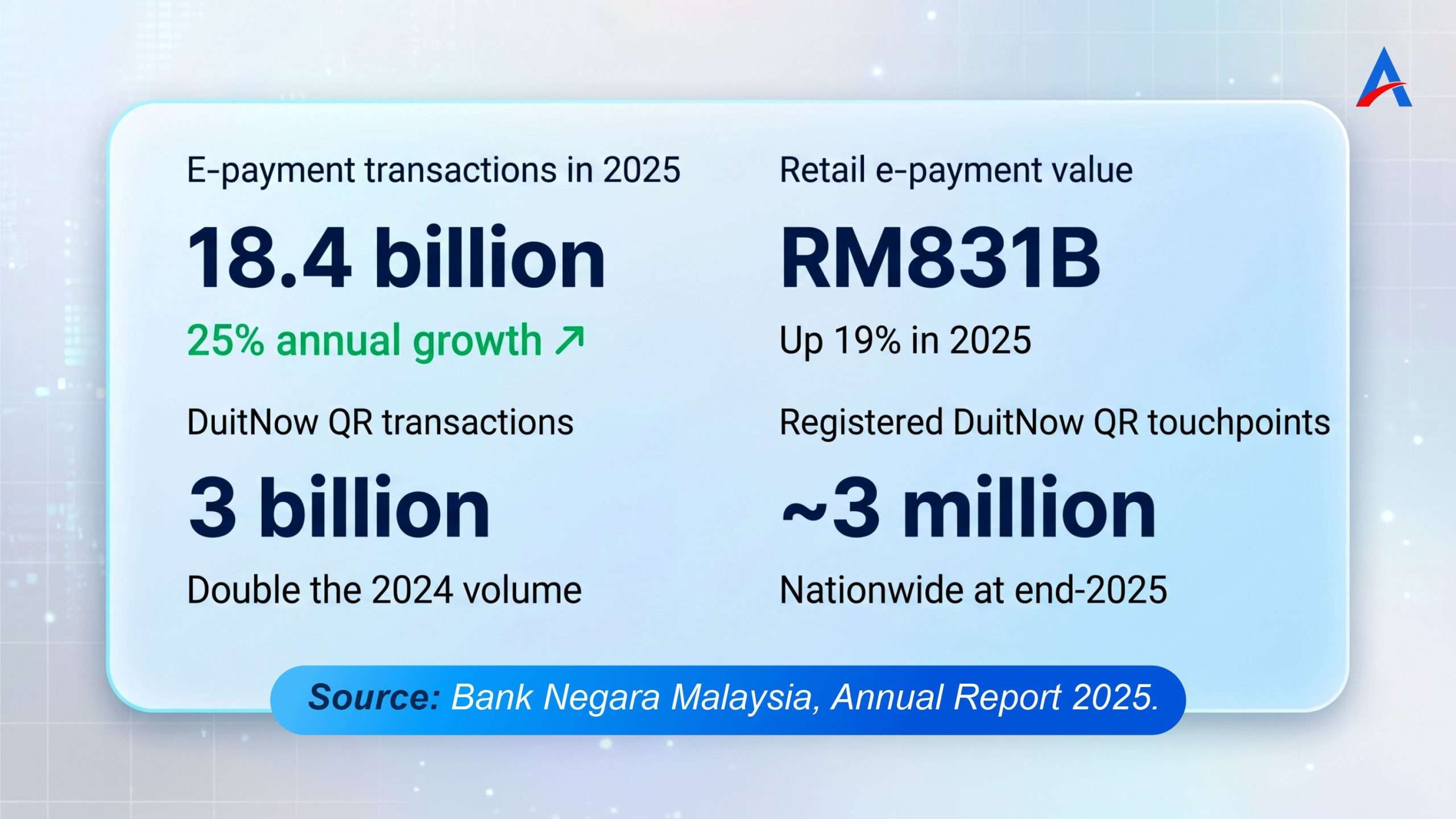
These numbers represent more than a shift away from cash. They reflect an expanding merchant ecosystem that needs reliable payment infrastructure and effective operational management.
As merchant participation increases, financial institutions have an opportunity to strengthen their role beyond providing banking services. They can build stronger relationships with merchants through the payment services, reporting tools and collection capabilities they offer.
The challenge is managing these services as one connected ecosystem rather than a collection of disconnected functions.
What merchants need beyond payment acceptance
A merchant may accept payments through cards, online banking, QR codes and e-wallets. But accepting the transaction is only one part of the process.
The merchant also needs to track payment outcomes, manage collections, understand settlement status and reconcile transaction records.
| Merchant requirement | What the financial institution needs to support |
|---|---|
| Payment acceptance | Access to relevant payment methods and channels |
| Merchant onboarding | Structured onboarding and merchant management workflows |
| Recurring collections | Support for authorised repeat payments and mandates |
| Settlement visibility | Clear information about payment and settlement status |
| Reconciliation | Tools to match transactions and identify exceptions |
| Reporting and analytics | Accessible transaction information and operational insights |
When these capabilities are connected, the financial institution can offer merchants a more consistent way to manage their payment operations.
This is where a merchant payment ecosystem becomes more valuable than a basic acceptance solution.
From providing payment services to operating a merchant ecosystem
For banks, developing a merchant payment platform is not just a technology decision. It is also a question of how much control they want over the merchant experience.
A fragmented approach can leave onboarding, transaction reporting, recurring collections and reconciliation across separate systems. A connected platform can bring these workflows into a centralised operating layer.
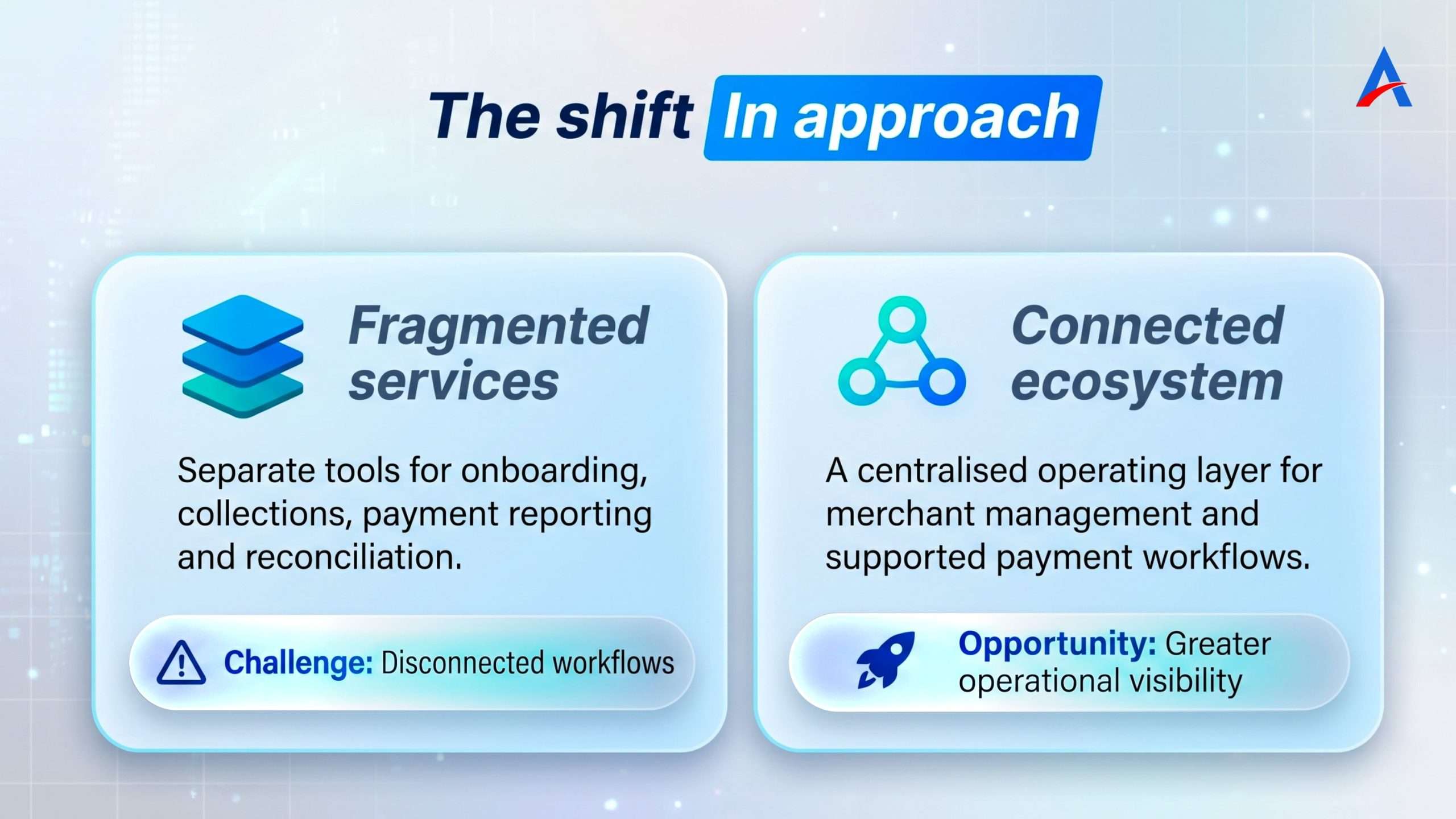
A connected platform does not eliminate every integration or operational challenge. Its value lies in making the merchant payment lifecycle easier to manage, monitor and improve.
For financial institutions, it can also create a stronger foundation for delivering a branded merchant experience.
How PayHub fits into this opportunity
PayHub by Ascertain Group is designed to help banks and financial institutions build and operate their own branded merchant payment ecosystem.
Rather than focusing only on transaction acceptance, PayHub brings together merchant onboarding and management, supported payment methods, recurring collections, settlement workflows, reconciliation and reporting within a connected platform.
Its value proposition centres on three areas:
- Own the merchant experience: Deliver a bank-branded merchant payment platform.
- Manage the payment lifecycle: Bring merchant operations, collections and transaction visibility into a centralised layer.
- Build beyond acceptance: Support a broader merchant service proposition through integrated payment capabilities.
For banks evaluating how to expand their merchant services, the question is not only which payment methods to enable. It is how to operate the complete merchant payment experience.
Conclusion: The next opportunity is to own more of the merchant relationship
Malaysia’s digital payment adoption has created a strong foundation. The next challenge for financial institutions is to translate that adoption into a more connected merchant service proposition.
For banks, this means looking beyond individual transactions towards merchant onboarding, collections, reconciliation and operational visibility.
PayHub by Ascertain Group helps financial institutions move towards that opportunity: from enabling payments to building and operating their own merchant payment ecosystem.
Explore PayHub and discover how your institution can build a more connected merchant payment experience.