

Date
17/November/2026
Share
One Payment Platform, Multiple Integration Options: Why Flexibility Matters in Merchant Payments
What is Payment integration Solutions?
Payment integration solutions connect a business’s website, application or payment interface with payment infrastructure to facilitate transactions and related payment processes.
Payment integration is not a one-size-fits-all exercise.
A small business may need a simple way to accept digital payments. An established e-commerce business may want greater control over its checkout experience. A bank may want to extend payment capabilities to merchants under its own brand.
The payment capability may be the same. The integration requirements are not.
As digital payments become more embedded in business operations, the challenge is no longer simply enabling another payment method. It is making payment capabilities accessible through integration models that fit different technical requirements, operational needs and customer experiences.
This is where integration flexibility becomes a strategic advantage.
Different Merchants. Different Integration Needs.
Every merchant operates differently. The right payment infrastructure should accommodate those differences rather than force every business into the same integration approach.
This is particularly relevant to DuitNow Pay, which supports account-based online payments, including one-time payments through DuitNow Online Banking and saved or recurring payments through DuitNow Consent and AutoDebit.
PayNet describes DuitNow Pay as a way for businesses to offer a more consistent online checkout experience across these payment scenarios.
Source: PayNet: DuitNow Pay Business FAQs
For financial institutions and payment providers, supporting these capabilities means considering how merchants connect to the payment ecosystem and how those connections are managed.
A flexible payment platform can support different integration models.
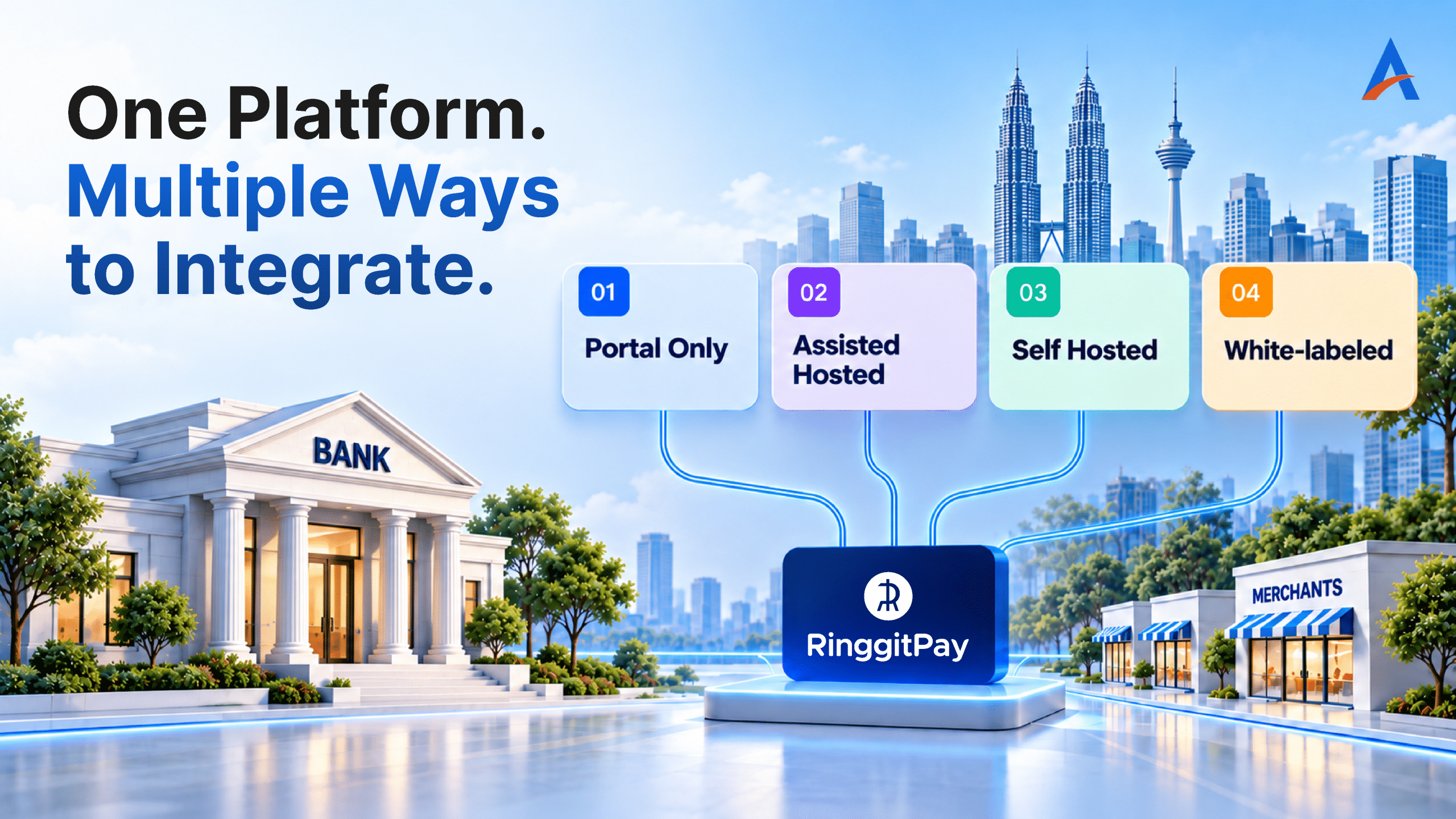
Portal Only: Simplicity Without Complex Integration
For merchants looking for a straightforward approach, a portal-based model provides a way to manage payment requirements through a central interface.
It can suit businesses that want to manage payment activities without developing a fully customised integration.
Assisted Hosted: A Connected Checkout Experience
Some merchants want to maintain their website and customer journey while relying on a hosted payment interface.
This approach separates the merchant’s storefront experience from the payment interface, reducing the need for the merchant to build every payment component independently.
Self Hosted: Greater Control Through APIs
For businesses with more advanced technical requirements, API-based integration offers greater control over how payments fit into their applications and checkout journeys.
This model allows merchants to integrate payment functionality into their own digital experiences.
White-Labelled: Technology That Supports the Bank’s Brand
Banks may also need a payment experience that aligns with their own brand and established merchant relationships.
White-labelled Merchant and Back Office Portals can support this requirement, allowing the technology to operate within a bank-aligned experience.
Each model serves a different need. Together, they offer greater flexibility across the merchant ecosystem.
Why This Matters for Banks
Banks already have established relationships with merchants. Extending those relationships with new payment capabilities requires more than making a payment method available.
It requires an approach that considers merchant onboarding, integration complexity, operational management and the experience delivered to the merchant.
PayNet’s official DuitNow Pay onboarding guidance outlines the roles of merchants, acquirers, Third Party Acquirers and System Integrators within the ecosystem. It also explains that merchants access DuitNow Pay through a participating acquirer or Third Party Acquirer offering the service.
The guidance highlights an important distinction: technology integration and merchant onboarding are connected, but they are not the same responsibility.
Source: PayNet Support: How Can I Start Enabling DuitNow Pay?
When every merchant requires a different implementation from the ground up, adoption can become more demanding to manage.
A flexible integration layer helps financial institutions accommodate different merchant requirements while building on a common technology foundation.
The objective is not to make every merchant integrate in the same way. It is to make different integration journeys easier to support.
The Technology Behind the Experience
A payment interface is only one part of the wider payment journey.
Behind it are the integrations, configurations and operational systems that enable transactions to move between the merchant and the payment ecosystem.
The technology layer must support the merchant’s chosen integration model while helping banks manage the wider payment offering.
This is why flexibility should be considered an infrastructure capability, not simply a checkout feature.
It gives businesses room to adapt their payment experience and gives financial institutions a practical way to serve merchants with different requirements.
Building for the Payment Ecosystem Ahead
As digital payments continue to evolve, businesses will need infrastructure that can accommodate new requirements without adding unnecessary complexity.
The long-term advantage will not come from offering more payment options alone. It will come from making those options easier to integrate, manage and extend across the merchant ecosystem.
At Ascertain, we believe technology should enable financial institutions and businesses to move forward with greater flexibility. Through solutions such as RinggitPay, different merchant integration models can be supported within a broader merchant acquiring framework.
One platform does not mean one way of working.
It means creating the flexibility to support different businesses, different integration needs and different payment experiences through a connected technology foundation.