

Date
7/October/2026
Share
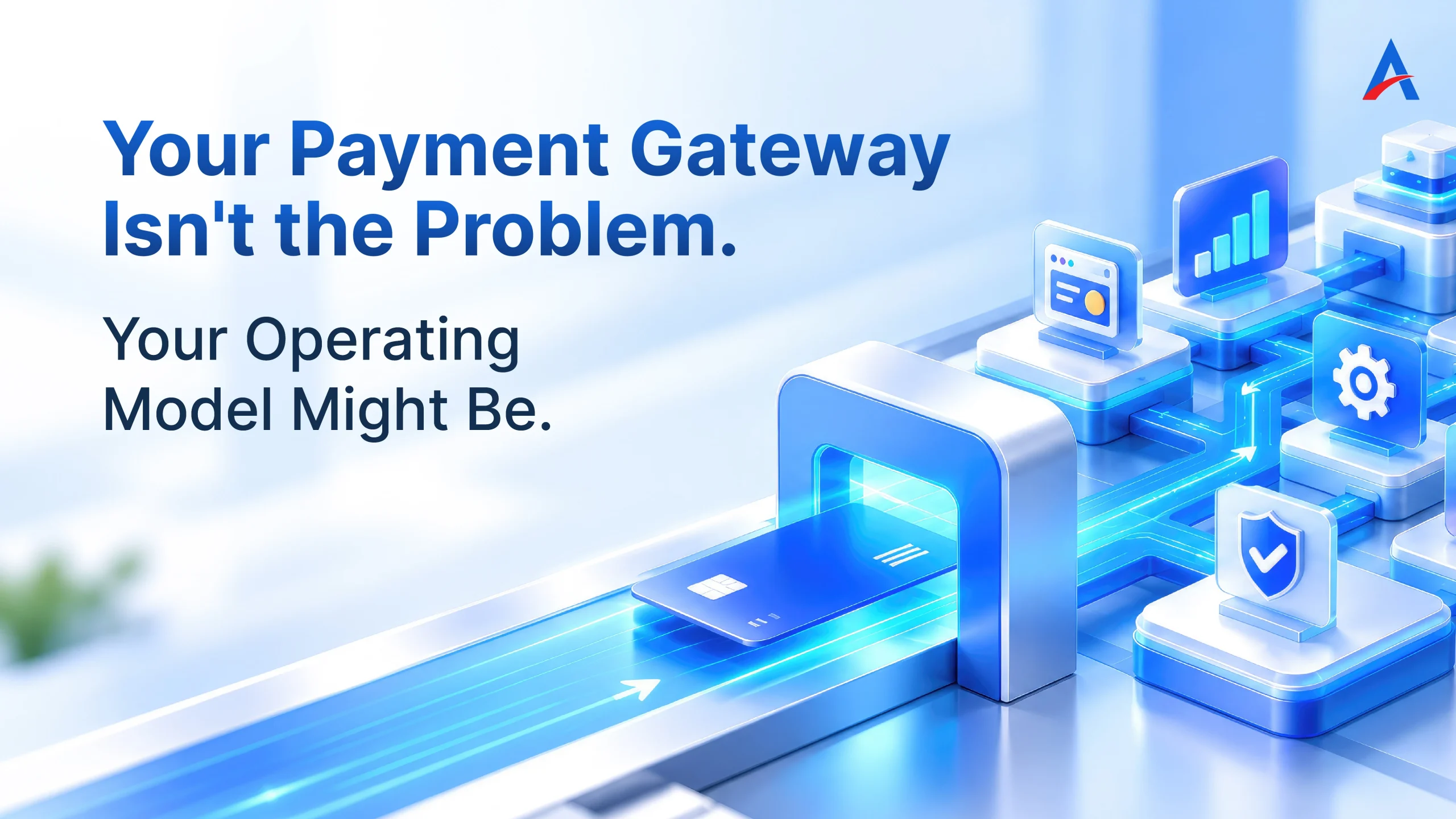
Your Payment Gateway Isn’t the Problem. Your Operating Model Might Be.
What is Payment Operations?
Payment operations refer to the processes and technology used to manage payment routing, reconciliation, settlement, fees, exceptions and operational controls across multiple payment channels and providers.
What is Payment gateway?
A payment gateway processes the transaction. Payment operations manage everything required to ensure that the transaction is correctly routed, reconciled, settled and accounted for.
The High Cost of Post-Transaction Chaos
To understand why traditional operating models fail, consider how payments move across regional hubs like Malaysia and Southeast Asia. A single enterprise merchant processes direct Account-to-Account (A2A) transfers via FPX e-Mandate and DuitNow e-Consent, instant QR payments, card tokenization, e-wallets (Touch ‘n Go, GrabPay), and Buy Now Pay Later (BNPL) schemes.
When transactions break down post-authorization, traditional gateways pass generic error codes, leaving back-office teams to clean up the mess manually.
Industry Market Benchmark: Citing analysis from McKinsey & Company’s Global Payments Reports, as instant and multi-channel payment networks proliferate, payments become increasingly disconnected from underlying bank accounts. This creates operational fragmentation across the value chain. Upgrading back-office operations and exception-clearing tools is now a primary requirement for acquirers to prevent high administrative overheads from eroding their net revenues.
When you run multiple payment rails through fragmented adaptors, your operating model faces three core failure points:
- Reconciliation Black Holes: When payment records, clearing files and bank statements sit in different systems, teams often have to reconcile them manually. Small discrepancies can take days to identify, leaving transactions unresolved and creating gaps in financial visibility.
- Fee & MDR Leakage: Managing variable Merchant Discount Rates (MDR) across channels via static gateway settings results in misconfigured billing, uncaptured surcharges, and costly month-end credit adjustments.
- Siloed Exception Management: When a recurring FPX e-Mandate or DuitNow e-Consent fails, operational teams lack visibility into whether the root cause was token expiration, bank downtime, or insufficient funds.
Legacy vs. Unified Payment Operations
| Operational Dimension | Legacy Fragmented Model | Ascertain PayHub Operational Layer |
|---|---|---|
| Fee & MDR Management | Static rules in individual gateways; manual month-end credit notes. | Centralized Dynamic Fee Engine configurable by channel, volume tier, and promotions. |
| Transaction Routing | Hardcoded routing paths causing high failure rates during provider downtime. | Smart Payment Routing based on real-time provider health, cost, and success rates. |
| Reconciliation & Clearing | Manual spreadsheet matching across bank statements, scheme files, and ledgers. | Automated Multi-Party Reconciliation with instant discrepancy flagging. |
Ascertain’s PayHub: The Central Operational Backbone
Rather than treating payments purely as a gateway connection, Ascertain designed PayHub as the operational orchestration platform that bridges front-end acceptance with back-office control.
Through PayHub’s Back Office Portal, Ascertain provides operations teams total control over the post-authorization lifecycle:
- Configurable Fee Engine: Automates dynamic MDR structures, fixed transaction surcharges, and multi-tier pricing in real time.
- Smart Payment Routing: Protects authorization rates by automatically re-routing transactions based on provider uptime, lowest cost, and health rules.
- Settlement & Discrepancy Control: Automates split settlements, tracks multi-provider payouts, and flags clearing exceptions instantly.
- Built-in Risk & Compliance: Delivers integrated fraud management, velocity checks, role-based access controls (RBAC), and full audit trails to meet strict regulatory standards.
By decoupling transaction intake from operational governance, Ascertain empowers financial institutions and enterprise merchants to expand their payment options freely without letting back-office complexity destroy their margins.
Ready to Eliminate Payment Operational Complexity?
Stop letting manual reconciliation, fee discrepancies, and payment exception bottlenecks eat into your profit margins.